5 reasons why bread is NOT bad for you.
At the supermarket, to grab my usual bread, I had to reach past a lady who was studying the nutrition labels. She excused herself saying, “Just checking to see how much sugar is in this bread”. I politely said there was no need to worry about sugar in bread. She looked at me incredulously and said; “but isn’t bread bad for you?” I replied, no not at all, it’s full of nutrients and most bread has no added sugar.
It never ceases to amaze me how basic healthy eating has become so warped thanks to all the fad diets, celebrity diets, food trends led by people with no formal nutrition training and media hype around food.
Did you know humans have been baking bread for at least 30,000 years? Almost every culture has its own version and it is one the most widely eaten foods all over the world today.
BREAD IS HEALTHY.
Some types of bread are certainly more nourishing than others; choosing a denser style bread, or one with plenty of grains, is a good way to ensure the bread you choose is full of good nutrition. A good rule of thumb is the heavier the bread, the more nutrition and dietary fibre. This of course doesn’t mean a lighter white or wholemeal bread is not a good choice, they absolutely can be. All bread is a fabulous medium to add all sorts of other nutrient rich foods. If you are wanting to buy a more nutrient rich bread, looking for one with fewer ingredients and no preservatives can sometimes be helpful.
While choosing high fibre wholegrain bread offers more nutrition and is generally more filling; even a white crusty bread, think France/Italy, can be part of a healthy diet. In fact the Mediterranean diet, considered by many authorities on nutrition to be one the healthiest ways of eating, includes 3-4 slices of bread daily. So if you can’t afford the more expensive artisan style breads, a plain white (or wholemeal) block loaf offers good nutrition too, especially if you’re using it for sandwiches where you can add a variety of other foods as mentioned above.
If you have gluten or wheat intolerance, there are now many wonderful gluten free breads. Spelt, which is a different variety of wheat, is often better tolerated by those who feel regular wheat is an issue, but who don’t have gluten intolerance. I prefer spelt bread due to its nuttier flavour and denser quality.
So what makes bread healthy?
1. It provides carbohydrate for energy.
2. It provides a range of B vitamins for energy metabolism and other important functions.
3. It can be an excellent source of dietary fibre for bowel health and to keep you fuller for longer.
4. Most breads in Australia are fortified with iodine and folate, two important nutrients many Australians don’t get enough of.
5. Most Australian bread has no, or very little, added sugar. Exceptions may be fruit bread or some Asian style breads.
In addition, toast makes an excellent medium for getting more extra virgin olive oil into your diet. If you ever find yourself in the dilemma over whether you should use butter or margarine, you could give both a miss and drizzle a good quality extra virgin olive oil over your toast. It really is delicious and you can still ass your favourite spread, be that sweet or savoury. I love jam with my olive oil on toast – it’s my favourite breakfast! If you’re a little skeptical, try it and see for yourself. But if you prefer the taste of butter, then use butter.
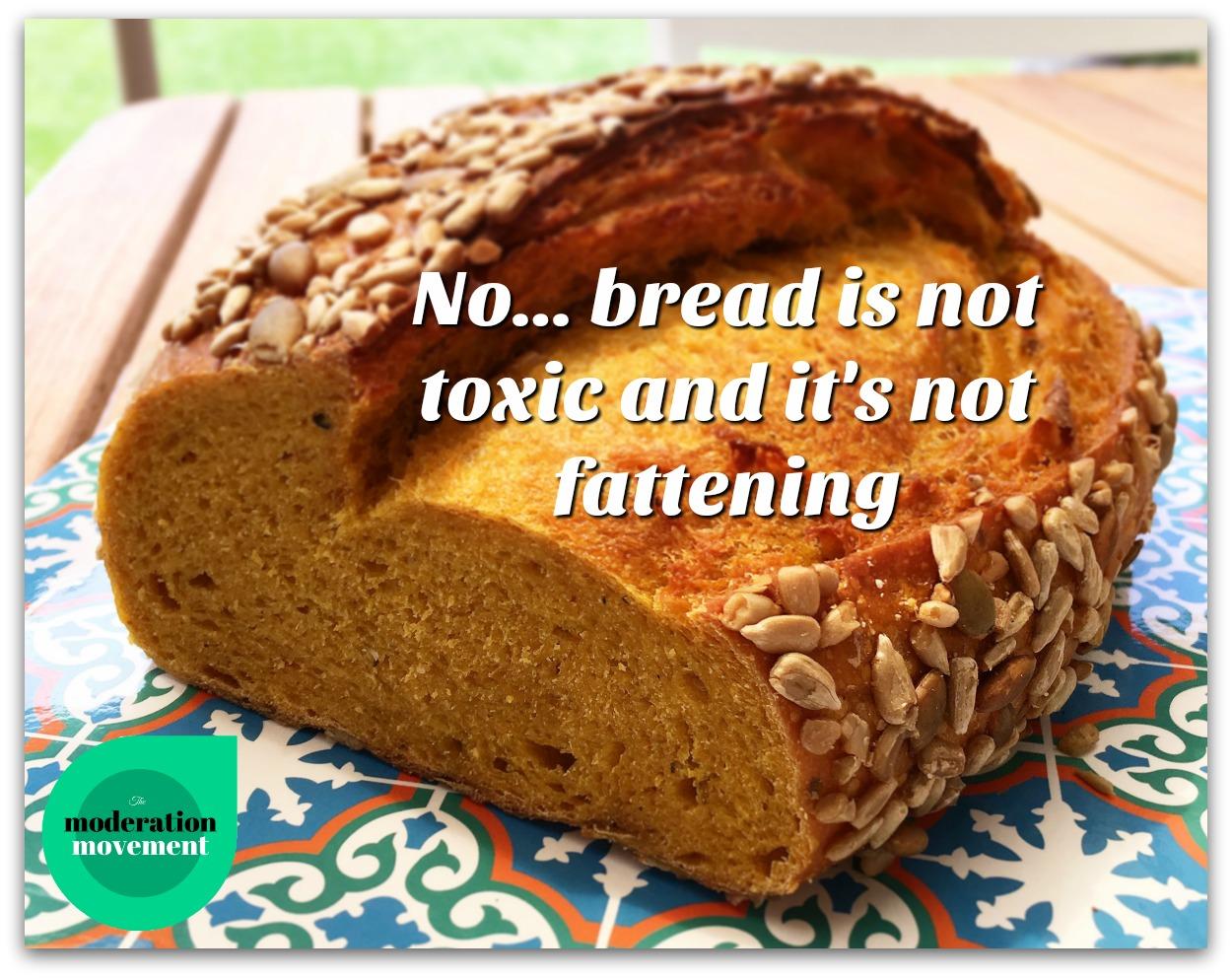
The pumpkin bread pictured is one of my favourites from Seddon sourdough kitchen. My other favourite is the Irrewarra sourdough range available in many stores across Melbourne.